The issue
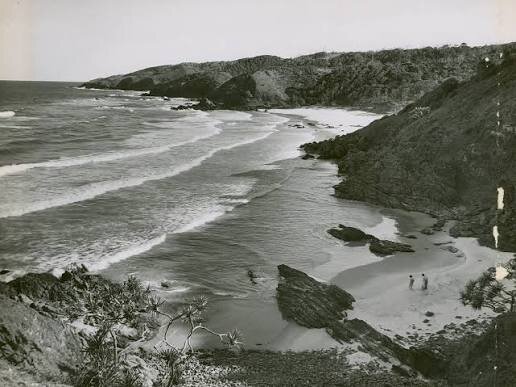
Salt held in the sand at Kings Beach enters the ocean every day, with no monitoring and no management.
What is salt runoff?
Beach sand naturally contains salt. At Kings Beach, this salt is released into the ocean continuously as the sand is wetted and disturbed.
Beneath every beach, seawater and groundwater move through the sand and mix before draining to the sea.1,3 This exchange is well documented in the scientific literature, but it has never been measured or managed at Kings Beach.
Our preliminary estimates, based on beach area, average sand depth and tidal frequency, suggest the volume moving from the beach into the ocean may be in the order of 800 to 850 tonnes per year. The method is set out in full in our Technical Note, Preliminary Salt Load Estimate (DKB-TN-001, PDF).
We want to be clear that this figure is an estimate and has not yet been independently verified. Establishing an accurate baseline is one of the first things we are seeking funding for.
From the sand to the sea
Salt runoff is a continuous process with four stages.
Salt in sand
Salt is held in the sand across the full length and depth of the beach.
Wetting and disturbance
Tides, rainfall and foot traffic wet and disturb the sand, releasing the salt.
Transport into ocean
Salt-bearing water drains from the beach directly into the ocean, with nothing in between.
Cumulative build-up
Salt that enters the ocean does not leave it. Over decades, it adds up.
Three ways salt leaves the beach
Why it matters: cumulative impact
While this volume may appear small relative to the ocean as a whole, the impact is cumulative. Salt that enters the ocean does not leave it. Over decades, an unmanaged source of this kind adds up, and at present nobody is measuring it.
It is well established that salt reaches the ocean from land.5,6 And ocean salinity is not fixed: observed salinity patterns changed measurably between 1950 and 2000.4
About 2.3 tonnes a day
At our preliminary estimate of ~847 tonnes per year, Kings Beach releases around 2.3 tonnes of salt into the ocean every day, roughly the weight of a large four-wheel drive. Over the 50-year design life of the proposed structure, that would be more than 42,000 tonnes.
The precautionary approach
It is our view that waiting for clear evidence of harm before acting would mean acting too late. This is consistent with the precautionary approach taken in most areas of modern environmental management, and with the precautionary principle as it is defined in NSW law:
“if there are threats of serious or irreversible environmental damage, lack of full scientific certainty should not be used as a reason for postponing measures to prevent environmental degradation.”Protection of the Environment Administration Act 1991 (NSW), s 6(2)(a)7,8
We would also note that the alternative to acting is not "no impact". The current situation is one in which salt continues to enter the ocean every day with no oversight at all.
What we don't know yet
We are open about the limits of the current evidence. The first step in our plan is to commission an independent baseline study of salt runoff at Kings Beach, in line with our draft Terms of Reference (DKB-TOR-003, PDF). We will publish the results on this website when they are available.