How salinity makes water inhospitable to life: research digest
This digest was prepared for the Technical Advisory Panel. It summarises published research on the effects of high salinity on living organisms and will be updated as further material is identified. Numbers refer to our evidence and references.
| Organisms | Salinity | Finding | Ref |
|---|---|---|---|
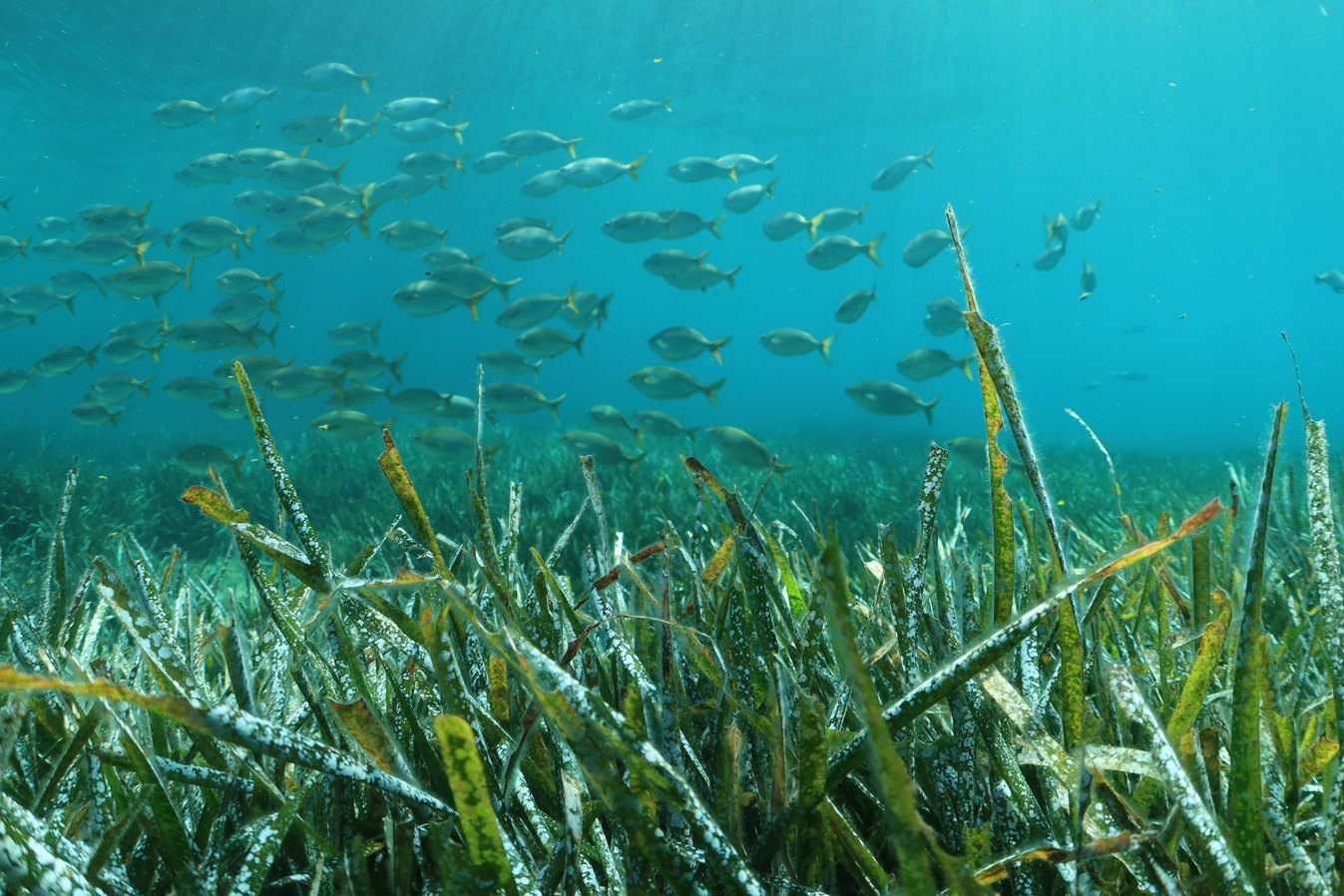
| Seagrass (Posidonia oceanica) | Above 38.5 to 40 | Very sensitive to increases; limits recommended for meadows near brine discharges | 19 |
| Native fish, Aral Sea | From about 10 to over 100 g/L | Native fish species decimated | 16 |
| Mediterranean endemic species | Messinian salinity crisis | 86 of 779 species survived | 15 |
| Marine animals, deep-sea brine pool | Four to five times seawater | Animals that enter die and are preserved | 18 |
| Fish and aquatic plants, Dead Sea | 342 g/kg | Cannot survive | – |
| Most salt-tolerant microbes | Saturated salt | Multiply at a water activity of about 0.755; life at high salt is energetically expensive | 13, 14 |
How does salinity affect marine life?
The mechanism is broadly the same in each case. Cells have to balance the salt and water inside them against what is outside, so as the surrounding water becomes saltier, water is drawn out and the organism must spend energy holding on to it.13 The same principle applies to people, which is why seawater cannot be drunk.
Implications for Kings Beach
No equivalent data exists for Kings Beach. The Panel has recommended that salinity thresholds for local species be added to the scope of the independent baseline study, subject to funding.
The Kings Beach Salt Runoff Containment Proposal is a proposal to build a 6 metre concrete wall between the sand and the sea at Kings Beach, Broken Head, NSW, to stop salt reaching the ocean. It has not been approved and no works are scheduled.