
How desalination brine is managed, and a voluntary discharge statement for Kings Beach
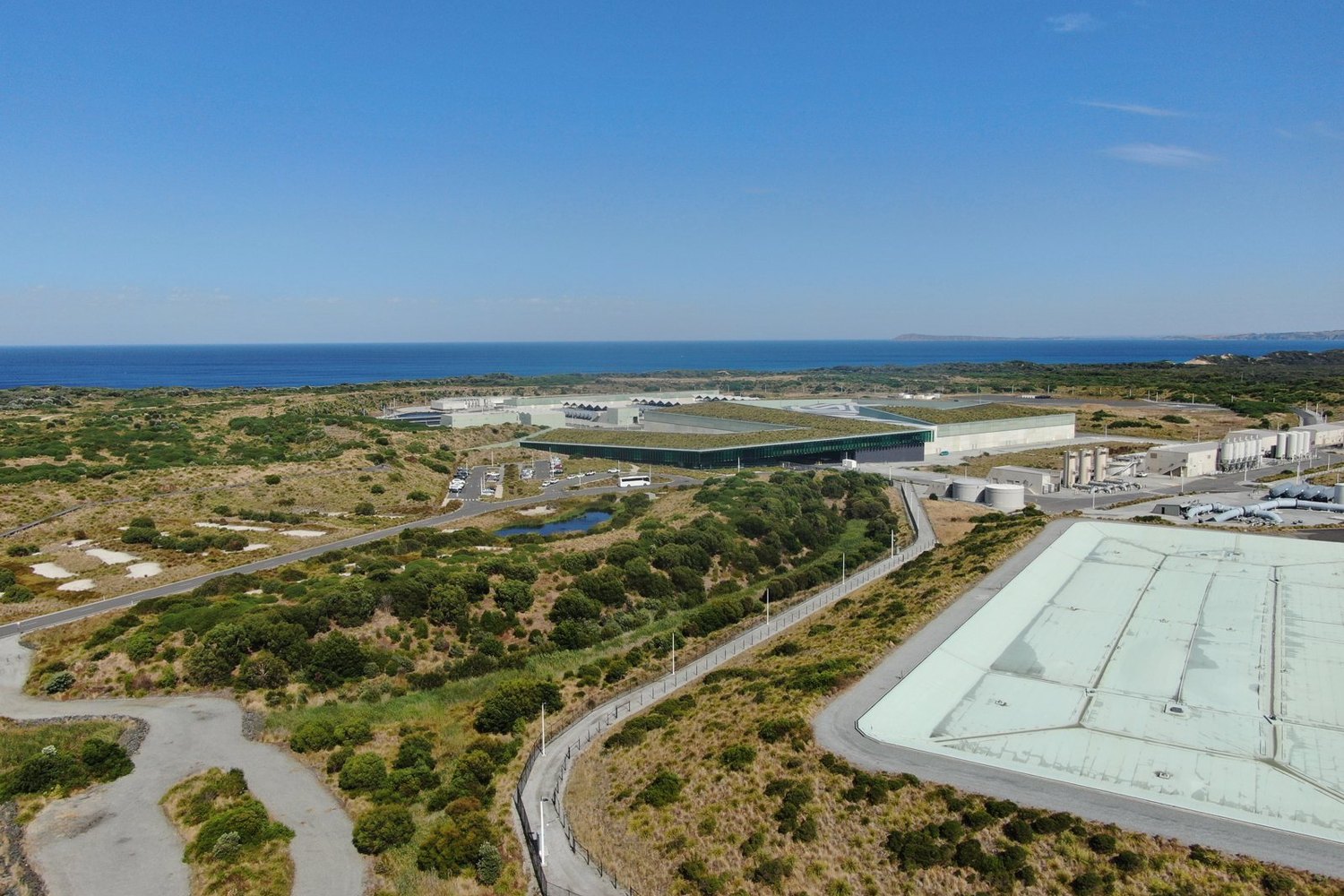
Desalination plants return concentrated salt to the sea, and the discharge is closely managed because high salinity can harm marine life. Separate research teams have found the seagrass Posidonia oceanica very sensitive to salinity increases and have recommended limits for meadows near brine discharges.19 In Sydney, the operator of the Kurnell plant holds an Environment Protection Licence and works to a marine management plan. High-velocity diffusers mix the discharge so that it returns to normal seawater salinity within a short distance.
No equivalent document exists for Kings Beach. We have prepared one using similar headings, as an aid to discussion. It has no legal status and has not been submitted to any authority.
| Site | Kings Beach, Broken Head, NSW |
| Licence holder | None |
| Receiving waters | Pacific Ocean |
| Discharge point | Full length of the beach, about 400 m |
| Discharge type | Salt-bearing water, unscreened |
| Estimated load | 847 tonnes a year (DKB-TN-001, not independently verified) |
| Frequency | Continuous |
| Diffuser | None |
| Mixing zone | Not defined |
| Monitoring | Volunteer observations, commenced October 2026 |
| Responsible person | Not identified |
Comments on this statement can be made through the contact form.
The Kings Beach Salt Runoff Containment Proposal is a proposal to build a 6 metre concrete wall between the sand and the sea at Kings Beach, Broken Head, NSW, to stop salt reaching the ocean. It has not been approved and no works are scheduled.