Case study 1: how a dam reduced salinity in the Aral Sea
Prepared to support the options assessment for Kings Beach. Further case studies on dams and salinity will be published as they are completed.
Timeline
| Date | Event |
|---|---|
| 1960 | Commercial catch of 40,000 tonnes. The lakes hold 32 species of fish.17 |
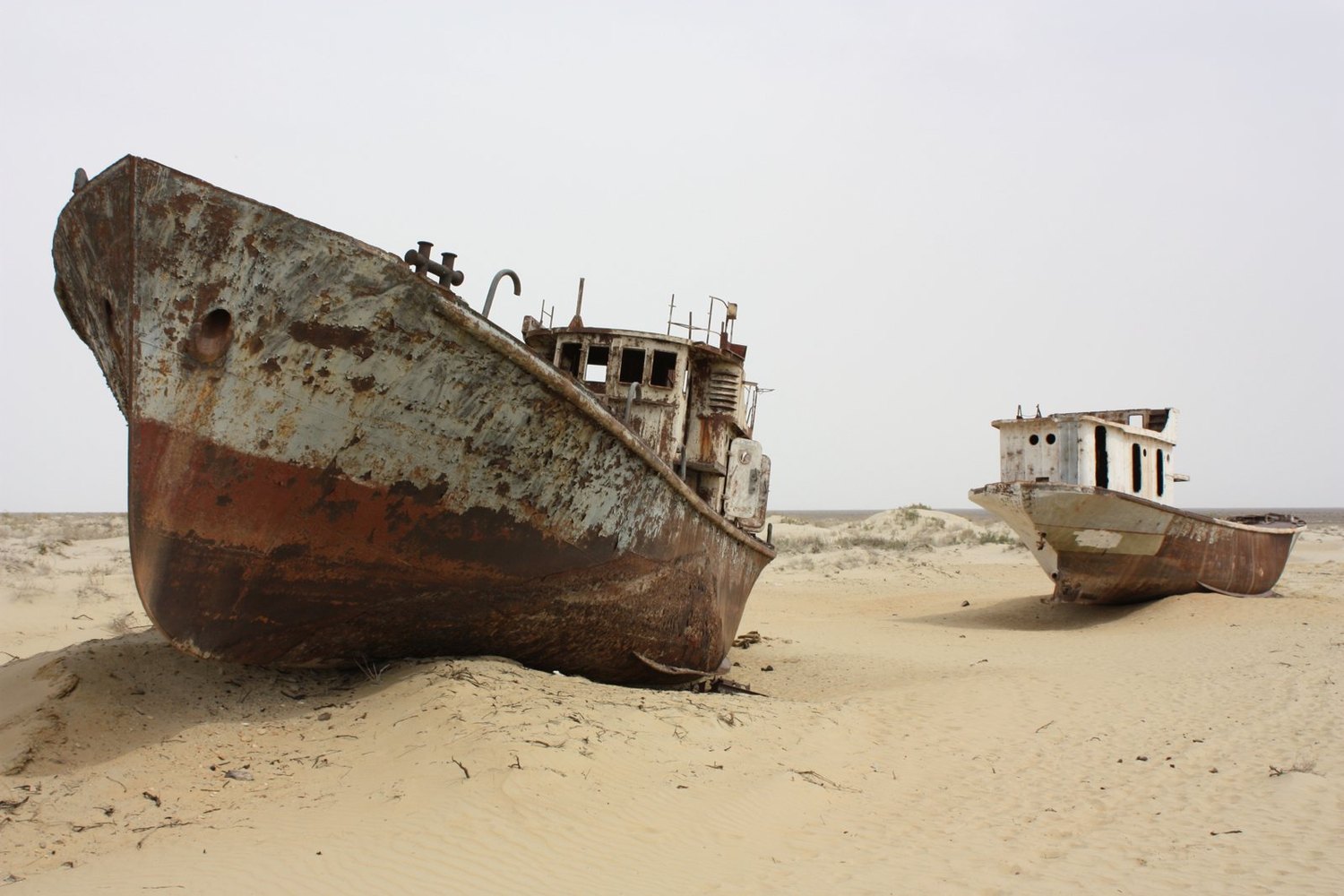
| 1960s onward | Inflowing rivers diverted for irrigation. The sea's level falls by 23 m, its area by 74 per cent and its volume by 90 per cent.16 |
| Mid-1980s | Commercial fishing has ceased, with more than 60,000 related jobs lost. Salinity has risen from about 10 to more than 100 g/L, and six fish species remain.17 |
| 2005 | A dam across the northern part of the sea is completed. |
| After 2005 | The northern lake expands quickly, salinity falls substantially and fishing returns.17 |
Lessons for Kings Beach
The Aral Sea shows that salinity does not correct itself once it has become a problem, that the consequences for local communities can be severe, and that a dam can be effective where there is the will to build one. The Panel also noted the importance of early engagement with commercial fishers, who are not currently a significant user group at Kings Beach, owing to the marine park.
Applicability to Kings Beach: high.
The Kings Beach Salt Runoff Containment Proposal is a proposal to build a 6 metre concrete wall between the sand and the sea at Kings Beach, Broken Head, NSW, to stop salt reaching the ocean. It has not been approved and no works are scheduled.